Client: Pexhurst Services Ltd
Role: Specialist Sub-Contractor
Scope
- Warm Roof Installation
Substrate Repairs
Vapour Control Layer
Thermal Insulation Boards
Liquid Applied Waterproofing
Anti-Slip Walkway
Details
-
- Occupied commercial office
Inverted roof was converted to a warm roof to resolved drainage issues
Sika Decothane Ultra applied to 3 roofs totalling 2,100m2
Detailing to 234 individual plinths from a previous BMU track system
- Occupied commercial office
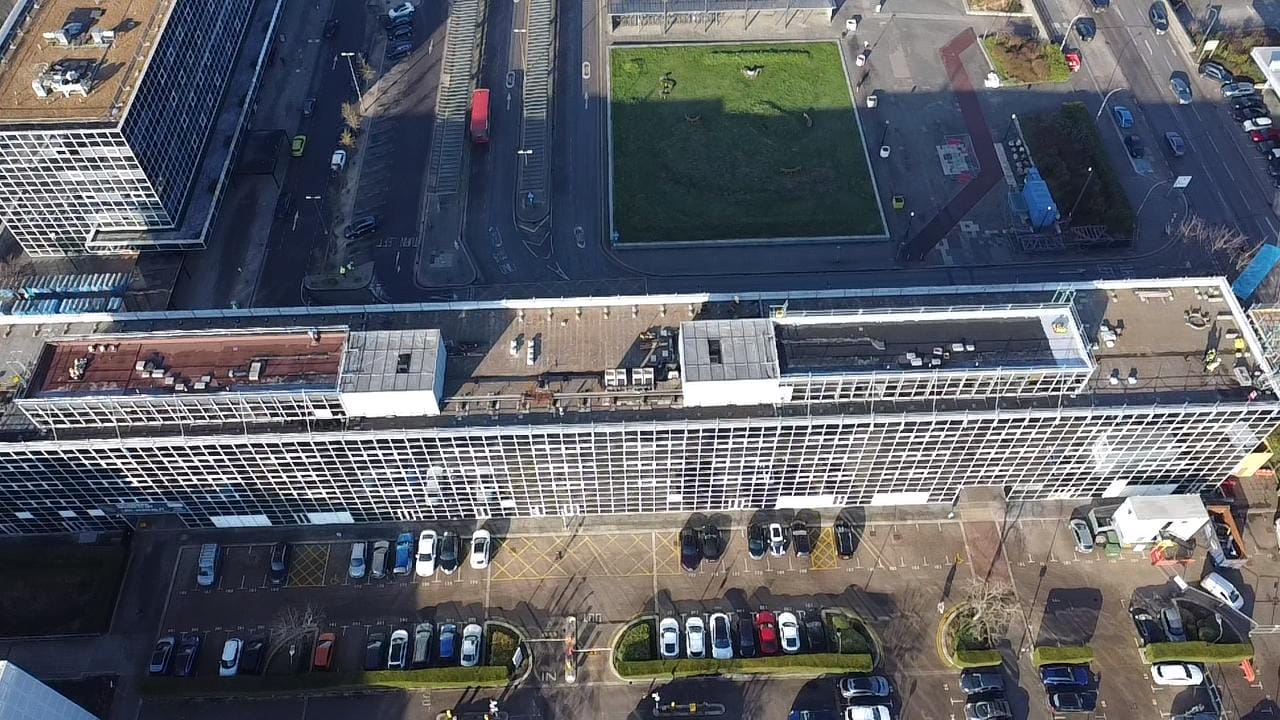
Elder House is a well-known office building in the center of Milton Keynes, providing workspace and meeting facilities for a variety of businesses. The building’s existing roof waterproofing system had reached the end of its serviceable life after years of exposure and patch repairs. This deterioration prompted the application of a durable, thermally efficient and fully waterproof replacement.
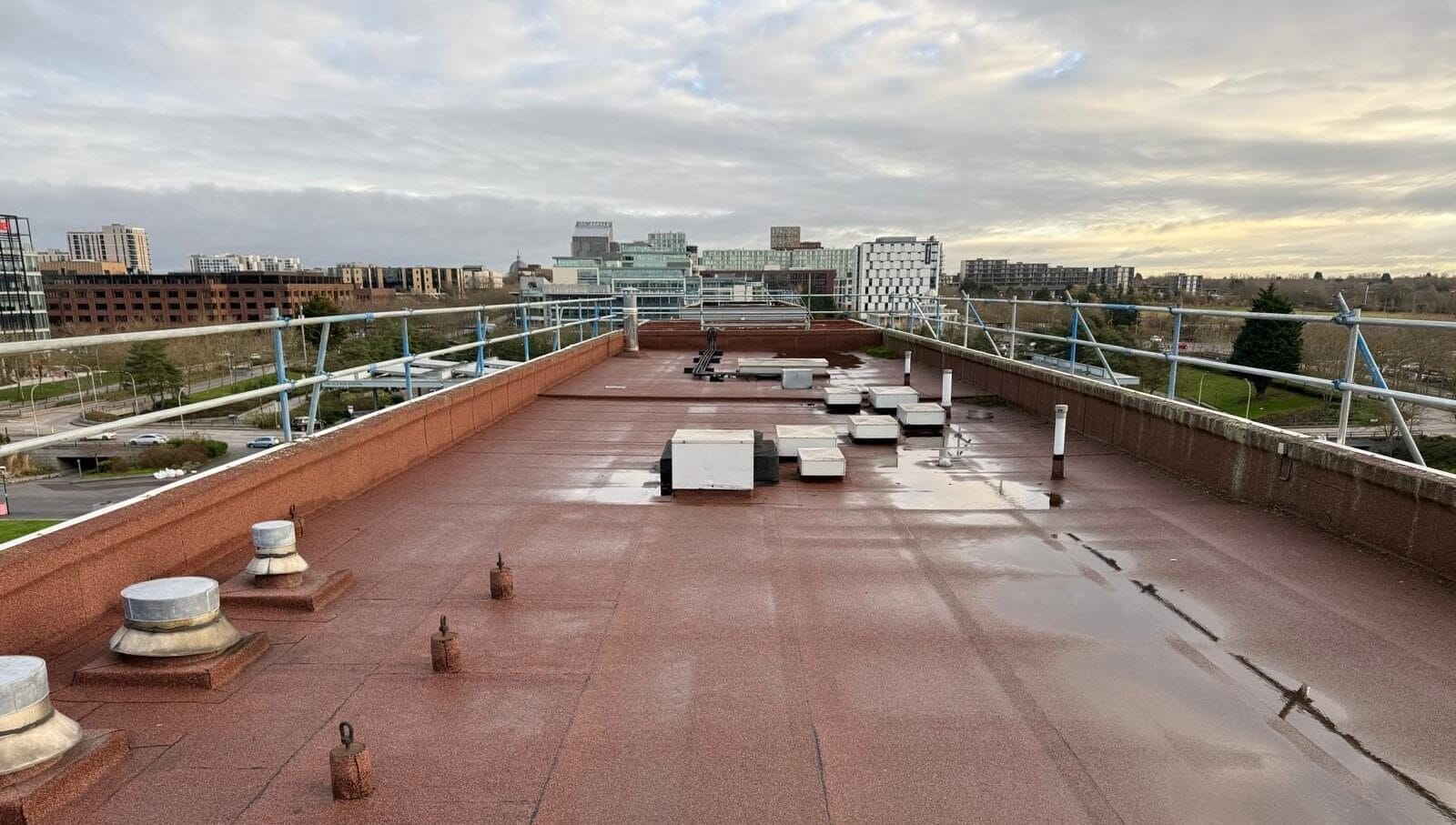
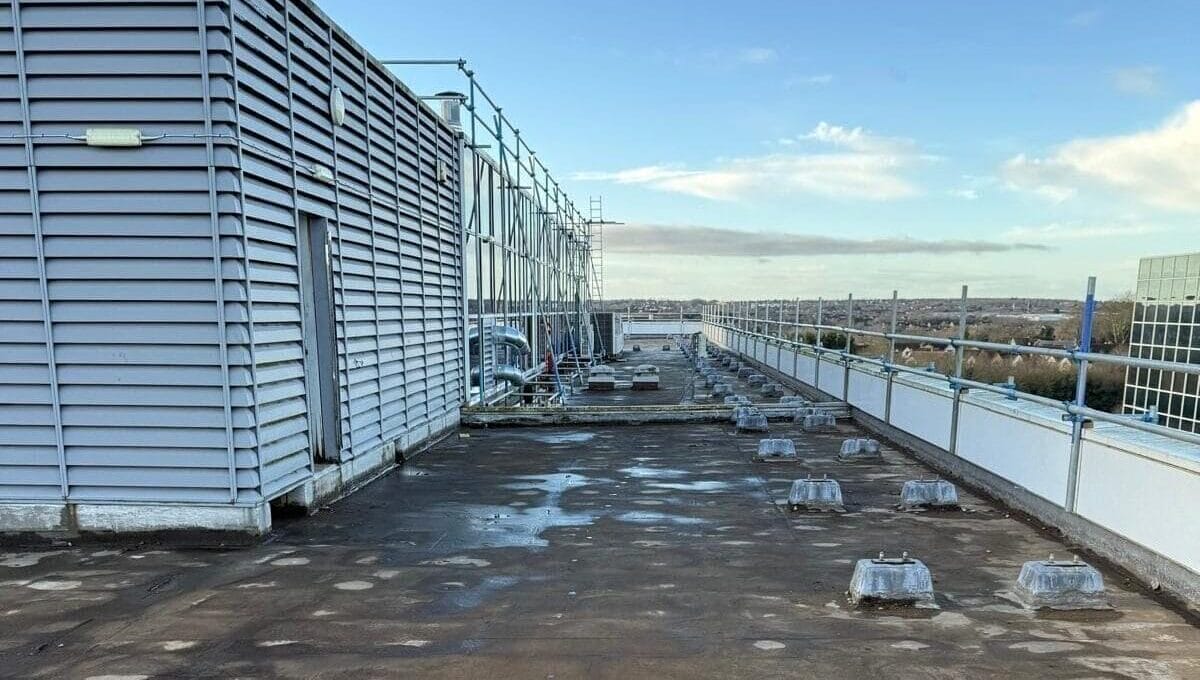
The existing inverted roof featured an aged asphalt membrane beneath layers of insulation, paving slabs and pebbled edging. As part of the refurbishment, the entire build up was carefully dismantled, exposing the original asphalt surface. The removal process was executed with exceptional attention to detail to safeguard the structure below and ensure no disruption to the neighbouring roof zones.
During this process, the insulation specification proved unsuitable for certain plantroom perimeters. The thickness of the insulation restricted the perimeter coverage and compromised the height of the upstands which prompted a redesign of the guttering and roof detailing. By adopting thinner insulation and a revised drainage layout, the new solution achieved the correct thermal performance and compliance without affecting the buildings structure, while the on-site problem solving prevented costly delays for the clients.
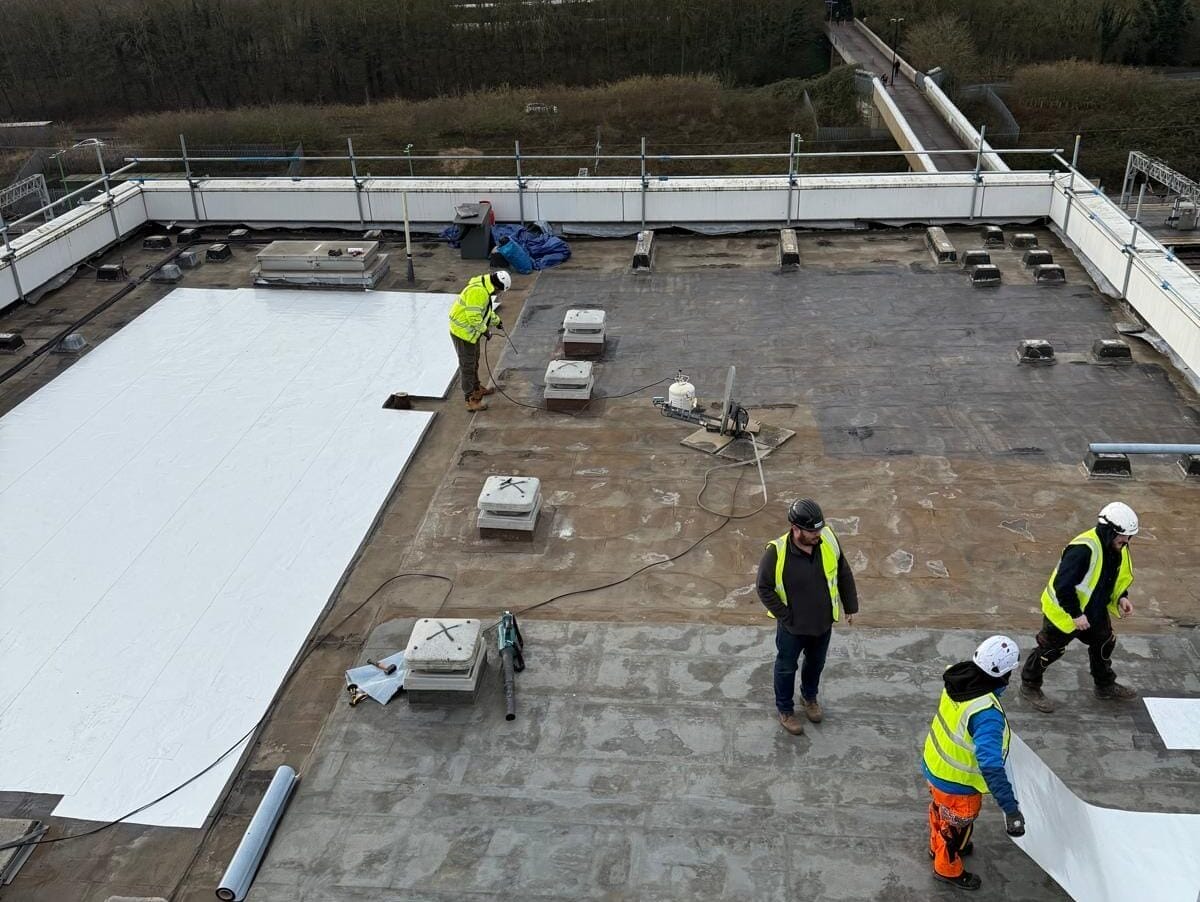
The roof reconstruction encompassed a total area of approximately 2,100m2, including 500m2 across the upper plantroom roofs and 1,600m2 on the main roof. Works commenced with repairs to the existing asphalt, ensuring a clean surface suitable for the new waterproofing system. Following surface preparation, a vapour control layer was installed to prevent moisture ingress from within the building, providing an effect barrier against interstitial condensation. This was followed by the installation of high-performance thermal insulation boards, carefully laid to achieve the specified U-value requirements and improve the buildings overall energy efficiency.
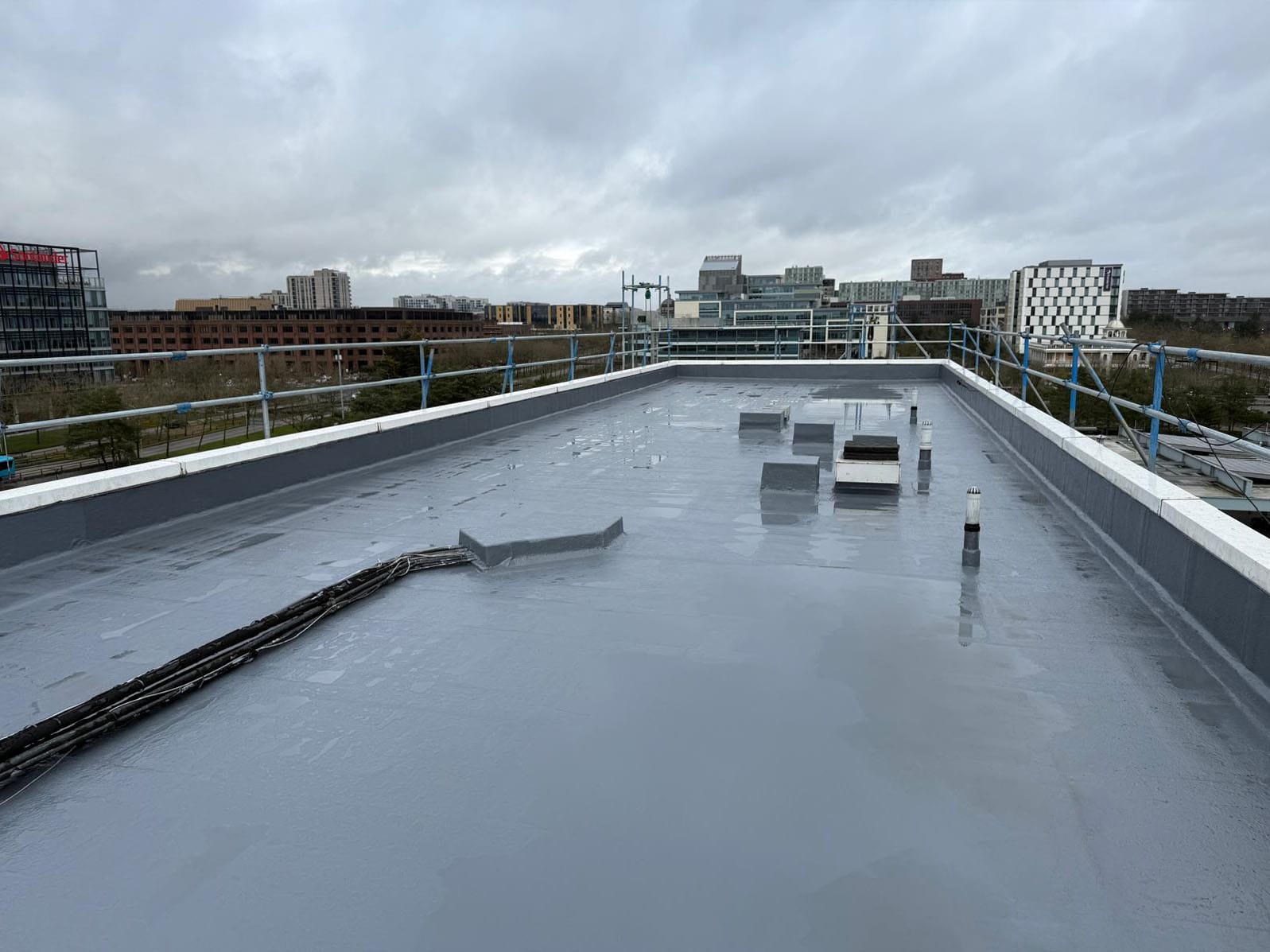
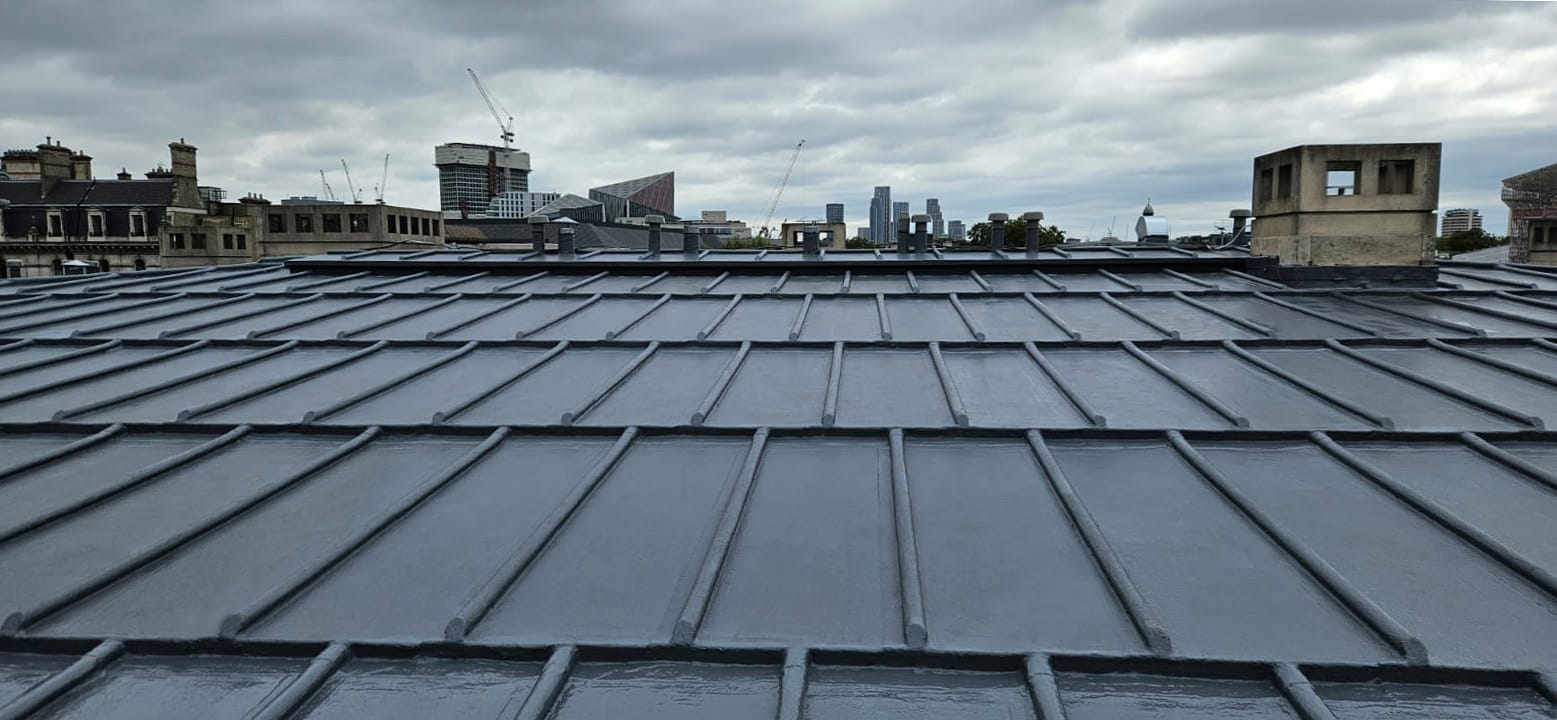
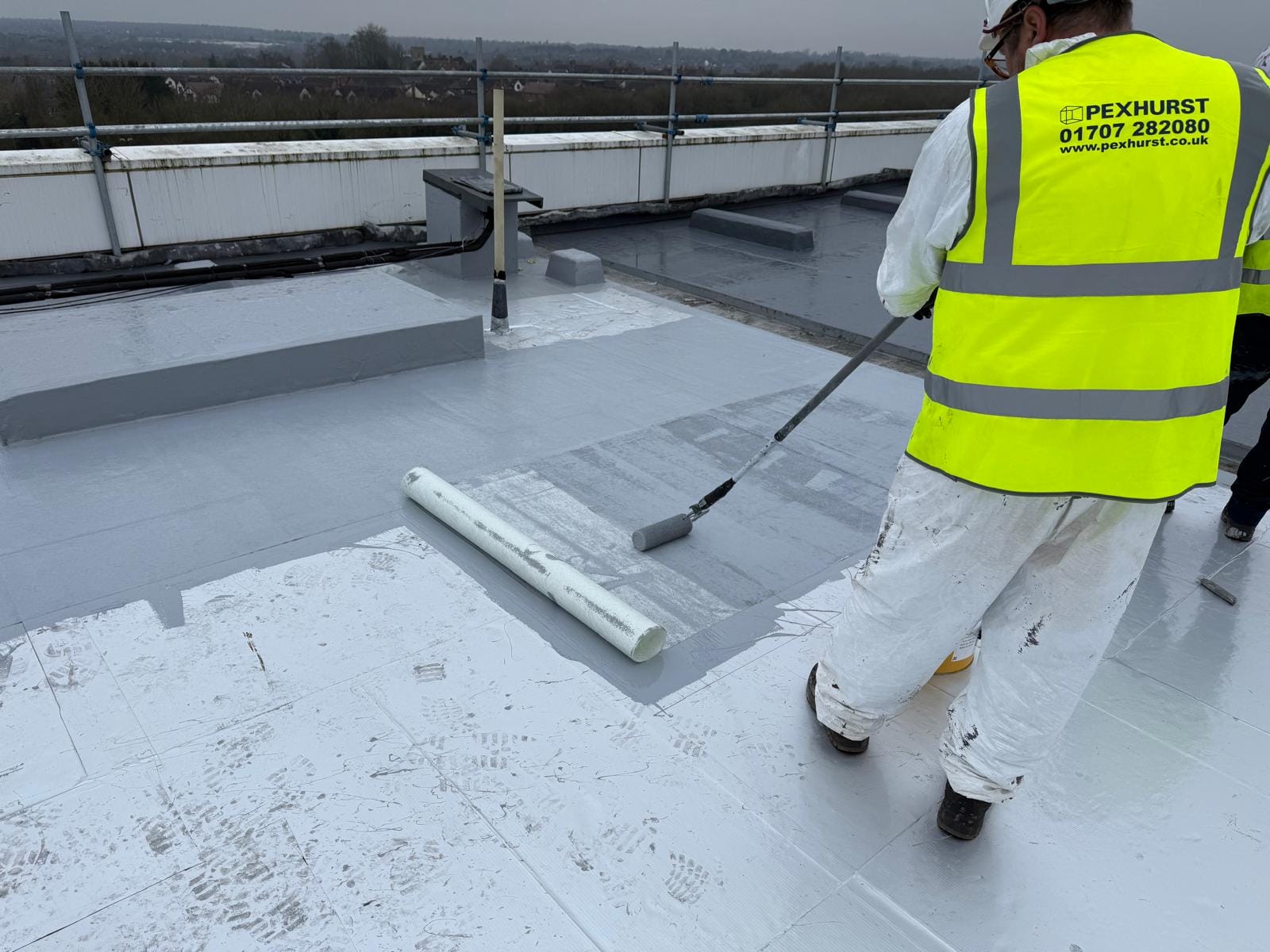
A carrier membrane was installed across all the roof areas to stabilise the surface and create a secure foundation for the waterproofing system. Following this, the Sika Decothane Ultra system incorporating fleece reinforcement was applied. This system is a cold-applied liquid waterproofing system providing exceptional durability, flexibility and rapid curing. The application included both Decothane Ultra base and top coats in slate grey, which together formed a seamless, fully bonded membrane capable of accommodating structural movement while delivering long-term protection against weathering and UV exposure. Additionally, the low odour formulation made it particularly suitable for use in an occupied building, where minimising disruption was essential.
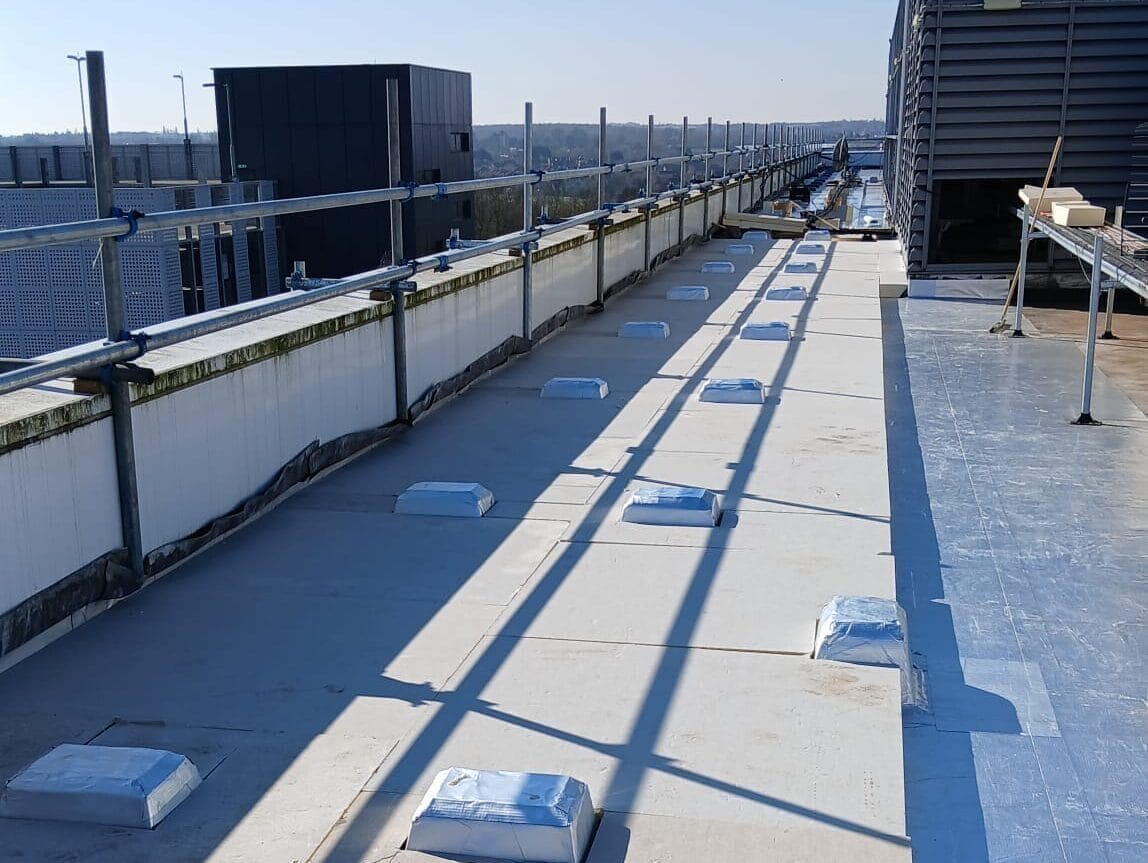
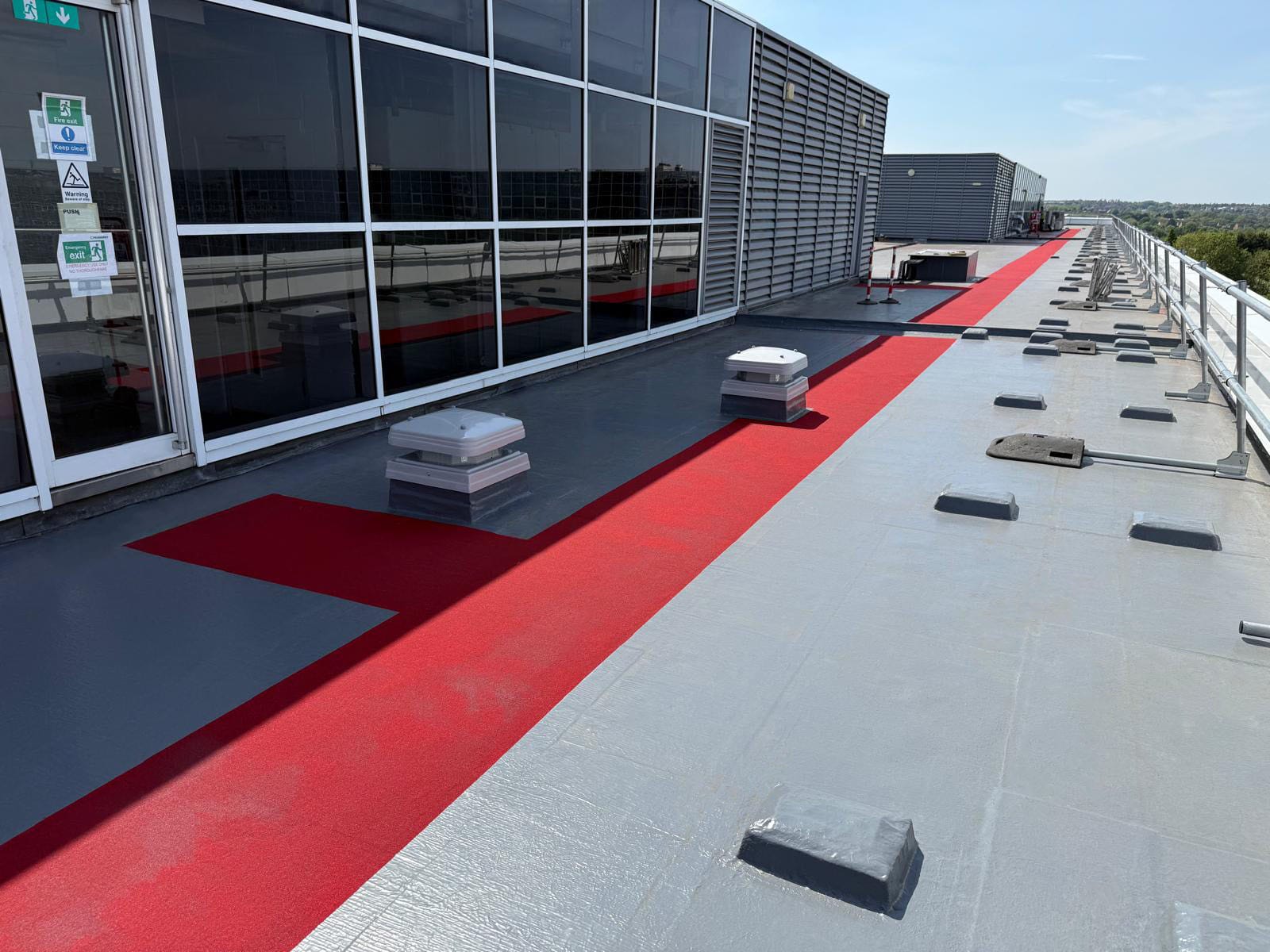
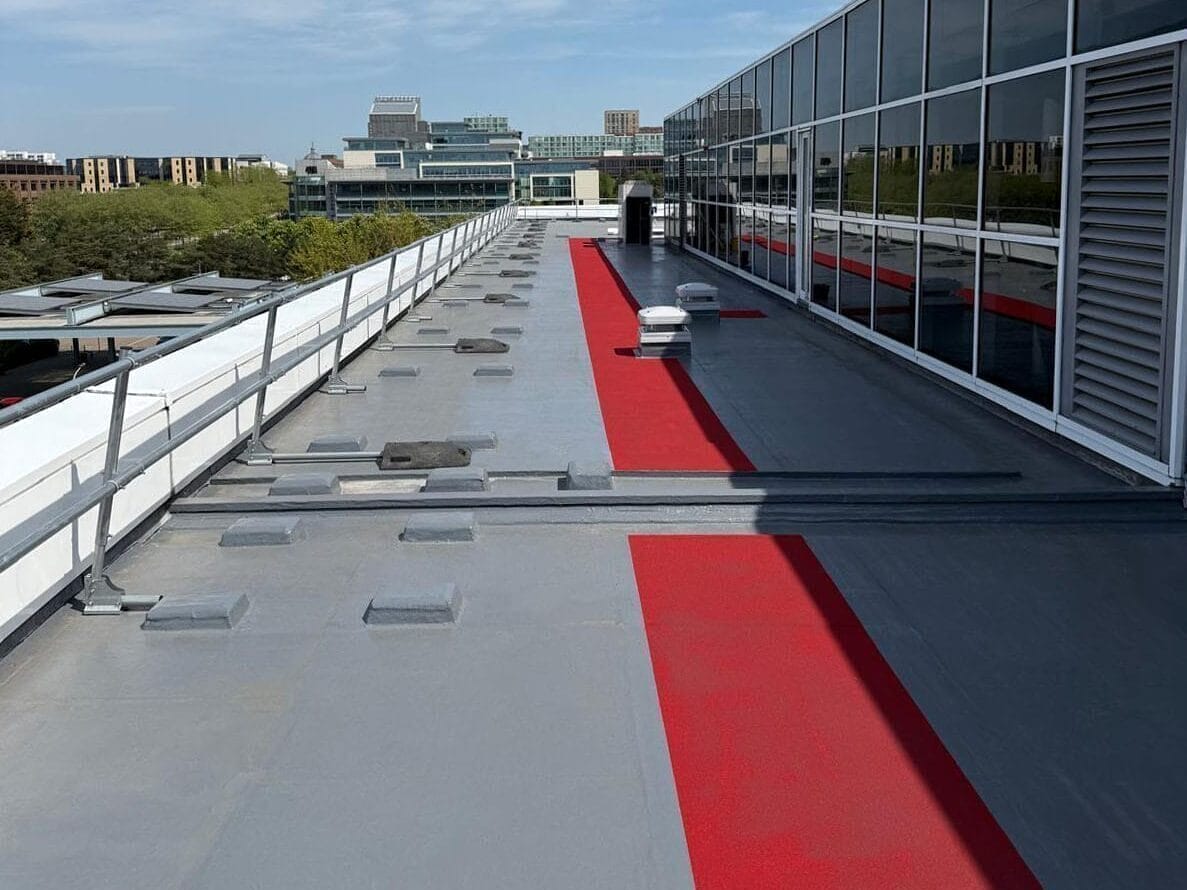
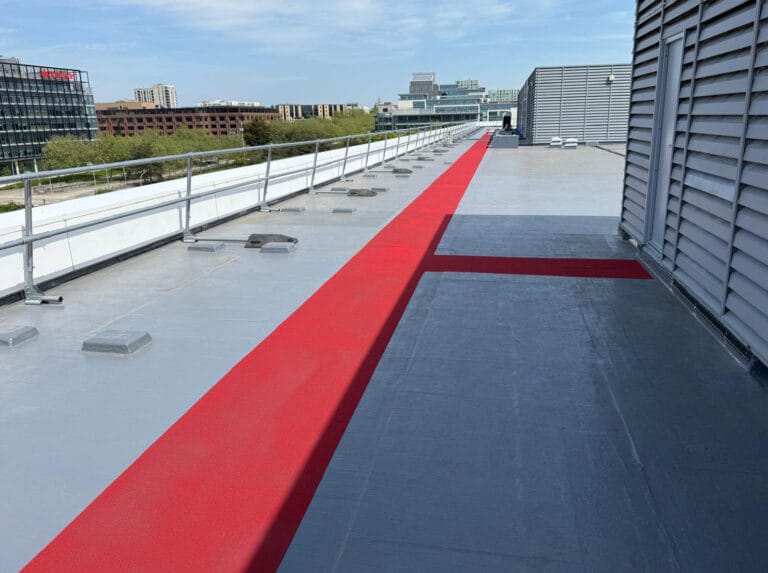
Finally, a bold red anti-slip walkway system was installed across the main roof, ensuring clearly defined and safe access routes for maintenance personnel while also providing a striking visual contrast against the slate grey areas.
Meticulous attention to detail defined every stage of the refurbishment. Two large roof access hatches were removed and rebuilt with new joisting, plywood decking and waterproofing to maintain structural integrity. Across the roof, 234 individual plinths, remnants of a previous BMU track system, required careful integration into the waterproofing layer.
The plant room areas presented further challenges, filled with air conditioning condensers, pipework and cabling that couldn’t be relocated. Waterproofing had to be applied beneath and around this fixed equipment, often in tight, confined spaces. Precise sequencing of work ensured complete coverage without interfering with existing services.
The work commenced just before Christmas and continued through the winter months, concluding in early May. The weather conditions were severe at times, with frost, snow and ice creating daily obstacles. Each morning began with the removal of standing water and drying of the surfaces before installation could proceed. These conditions demanded flexibility, innovative planning and strict adherence to safety and quality standards to maintain steady progress.
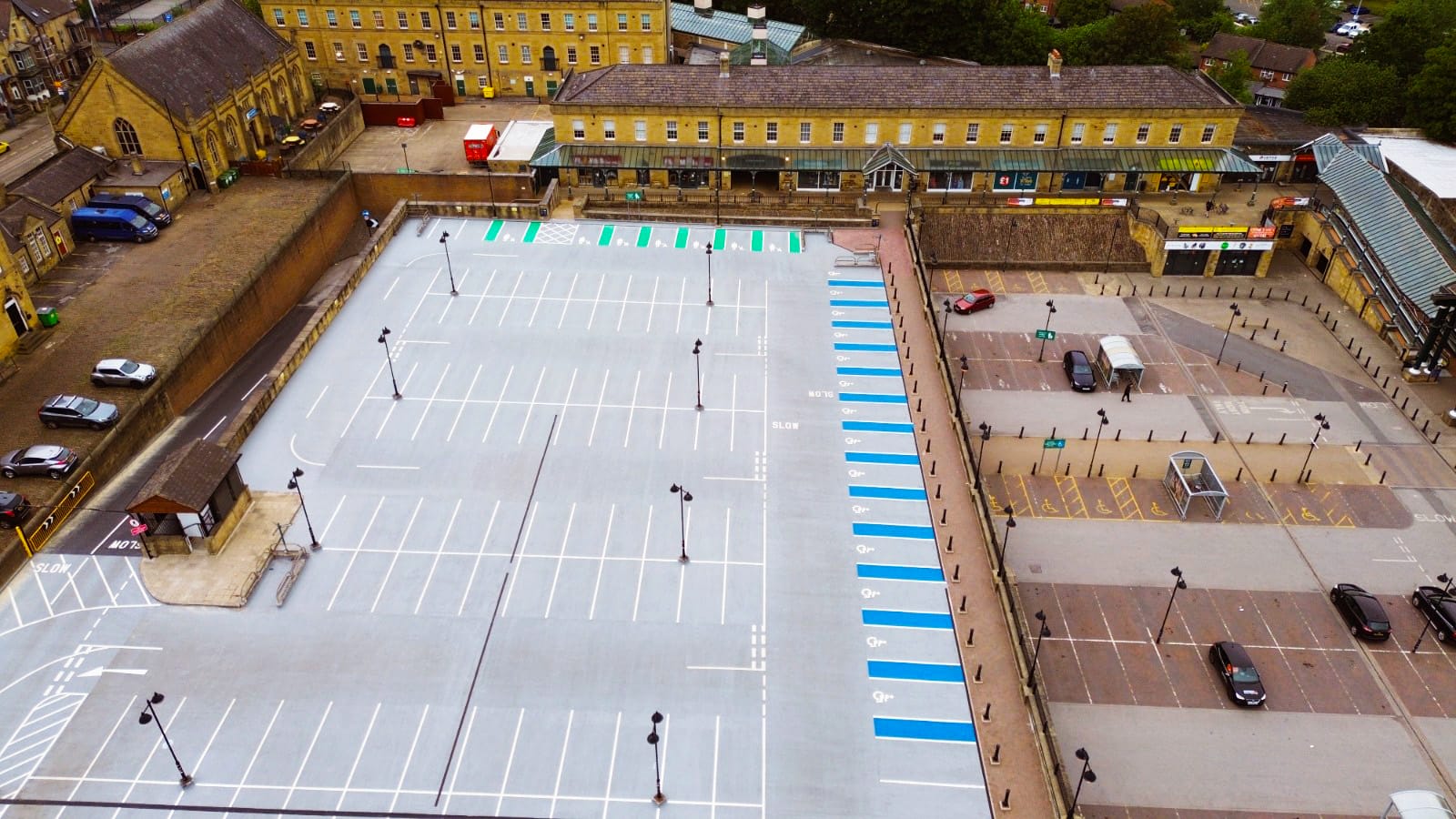
Logistics posed additional challenges, the limited site compound left little room for material storage and the shared car park, used by the building tenants and nearby train commuters, restricted delivery access. Deliveries were scheduled during quieter hours and materials were brought in smaller, more frequent loads to minimise disruption. All of the work areas were carefully sectioned off to ensure the building could remain fully operational throughout.
Beyond its improved aesthetics, the new warm roof significantly enhanced energy efficiency and made the structure water tight. The transformation from an uneven, weathered surface to a clean, high performance finish demonstrates the value of expert planning, detailed craftmanship and adaptability. Elder House stands as a model of collaboration, technical precision and resilience, delivering lasting protection and renewed visual appeal for years to come.